
FAM: After the Great Fire of 1776: Townhouses, Tenements & Towers with Joe Svehlak
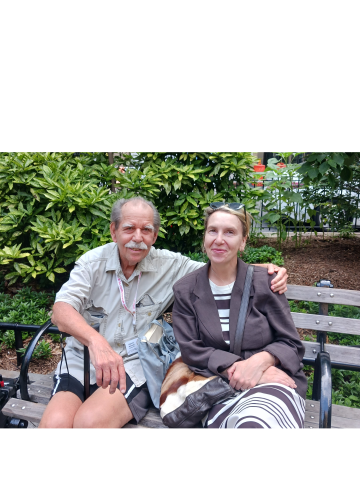
by Joe Clopper
Joe Svehlak’s Lower West Side FAM delivered exactly what its title promised — townhouses, tenements, and towers — while revealing far more than many participants may have expected from such a compact area.
In just under two hours, Joe guided the group through roughly 250 years of Manhattan history. The tour began with the aftermath of the Great Fire of 1776, when a large portion of colonial New York was devastated, and traced how the city rebuilt westward onto landfill beyond the original Greenwich Street shoreline. Surviving early townhouses became evidence of a once-fashionable residential district before the neighborhood transformed into a dense working-class and immigrant quarter.
The tour’s richness came from Joe’s ability to make every block speak. He pointed out architectural details — windows, lintels, façades, fire escapes, decorative treatments, and changes in scale — and connected them to broader stories of class, immigration, industry, faith, and urban change. What could easily have been a short walk became a concentrated lesson in how to read the city.
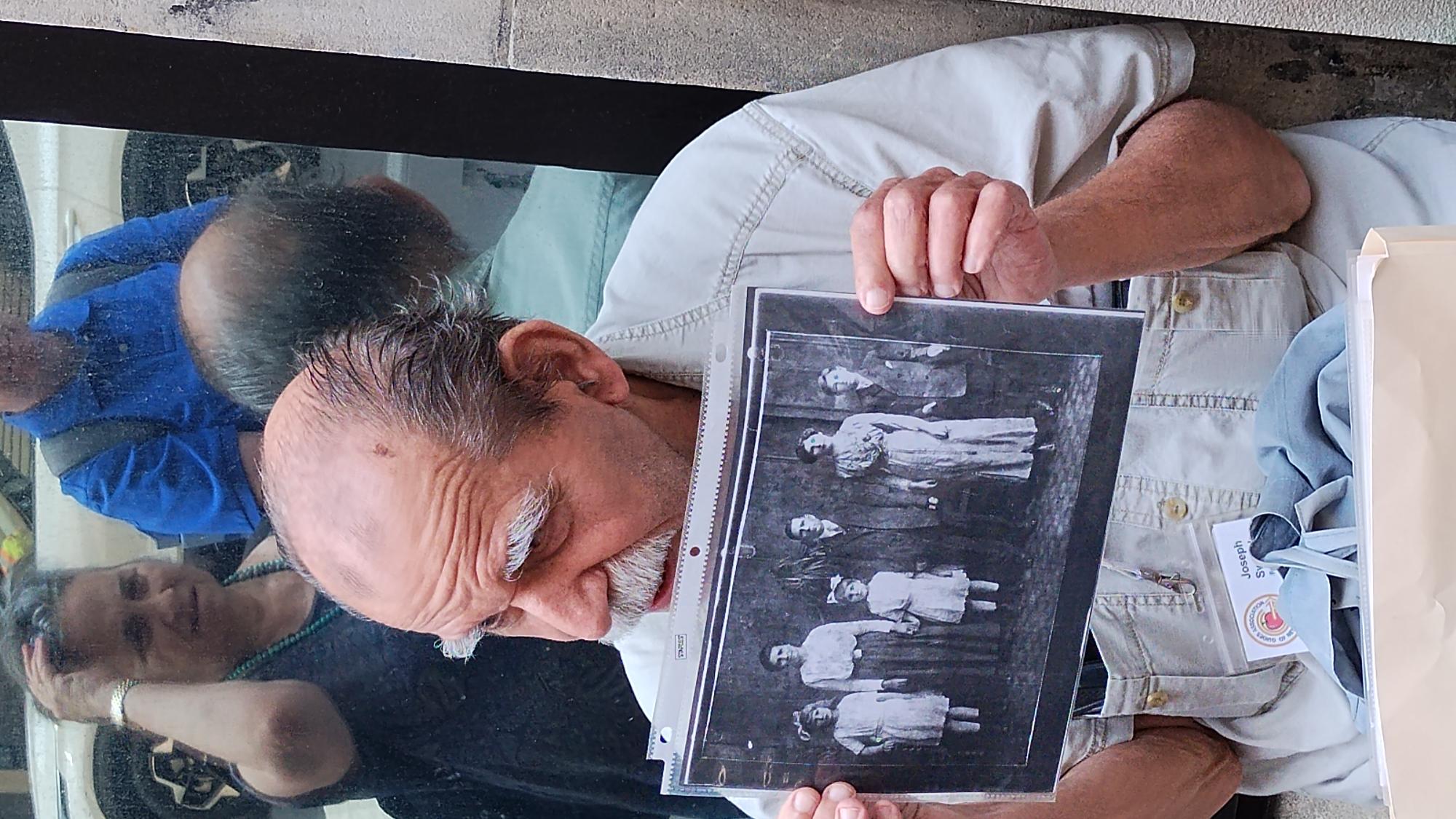 Highlights included surviving Federal-era buildings, a former Syrian Orthodox church, the Downtown Community House and its century of social service, the layered history of Little Syria, and the impact of the Brooklyn-Battery Tunnel and World Trade Center construction. Joe also brought attention to less expected layers: the early Greek community, St. Nicholas Greek Orthodox Church, Radio Row, preservation activism, public art honoring Little Syria’s literary heritage, and the continuing debate over redevelopment at the future 5 World Trade Center site.
What made the FAM especially memorable was Joe’s personal and deeply local style. His family connection to the area, his knowledge of preservation figures such as Esther Regelson, and his eye for overlooked details gave the tour the feeling of a neighborhood being remembered from the inside. A bench plaque, a surviving brick building, a mural, or a single façade became part of a larger story of memory and displacement.
The Lower West Side emerged not as a vanished neighborhood, but as a place whose history still survives in fragments — in buildings, churches, plaques, murals, street patterns, and community memory. Joe showed that this small section of Manhattan contains an extraordinary concentration of New York history.